The Wonders of Fore

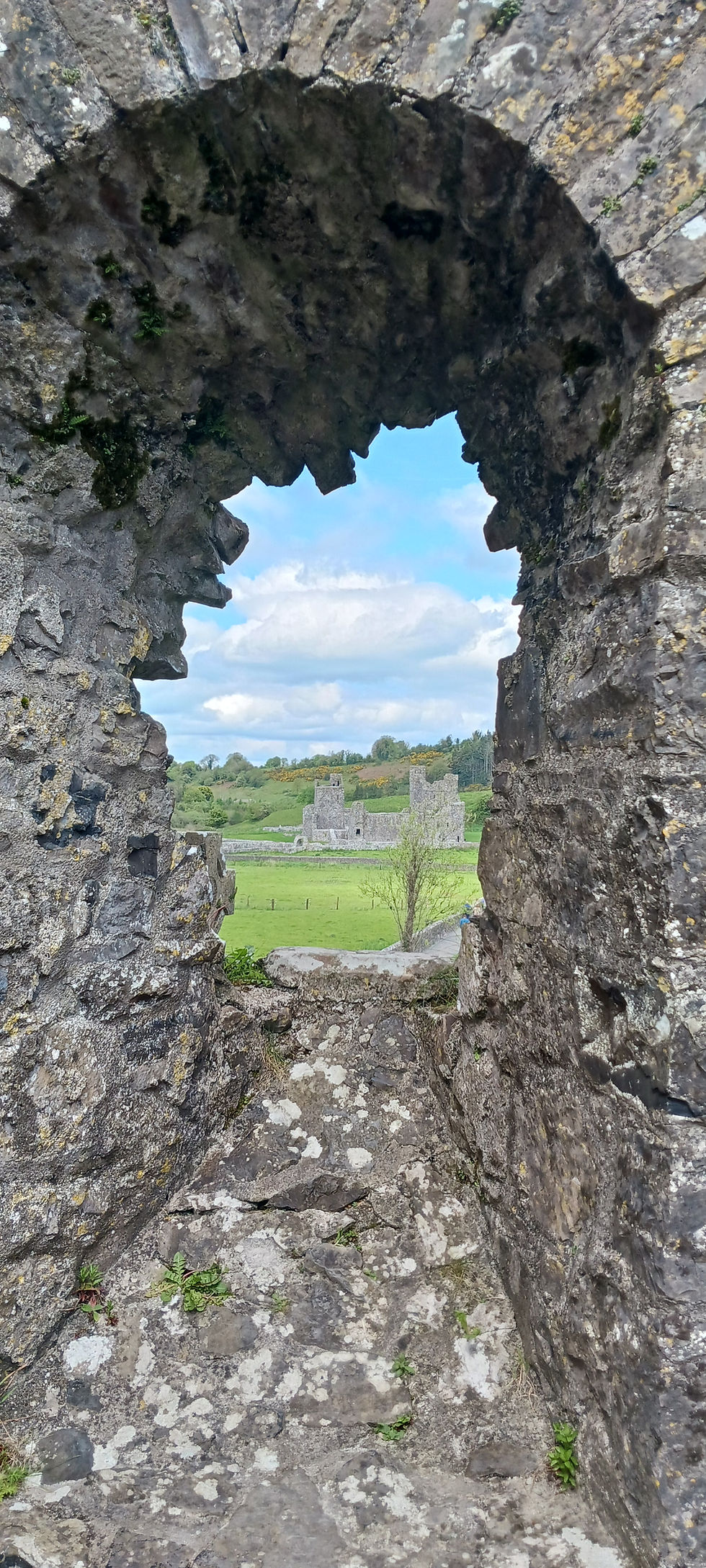
Despite its ‘Seven Wonders’ Fore in Westmeath remains largely unvisited. Not only are there ‘Wonders’ to be wondered at but they are spread over a bowl-shaped valley with historic remains tracing 1500 years of Irish history,
The ‘Wonders’ are: a monastery in a bog, a mill without a race (stream), water that flows uphill, a tree that won’t burn, water that doesn’t boil, an anchorite in a stone (tower) and a lintel stone raised by prayer. For a while I thought I had found an eight.
Within the saucer-shaped valley there are at least three gates, now standing isolated and almost forgotten. One to the east, one to the west and another at the monastery to the north. Any wall connecting them would have surrounded a considerable area, now almost empty because it is (and probably always was) a bog.
Was there ever a large town there? With a bog in its centre?
When I finally discovered the answer it was not as dramatic as I had expected but it opened a page of Irish history that I had skipped over.
Fore’s fame goes back to the monk Feichin (also of Omey island and Termonfechin) who in 630 set up a community on the hillside where the 10th century St Feichin’s Church now stands.
It drew students from Ireland and abroad and was so important that when the Norman Hugh de Lacy received lordship of Meath he had a fortified Benedictine monastery built there around 1180. It still stands strong with its own imposing gateway.
In the 15th century the area was at the edge of the Norman-controlled Pale and vulnerable to raids from Irish families like the O’Reillys and the O’Farrells. Its defences were strengthened.
But how far did the town walls extend? As you can see today the monastery was formidable but it is on the other side of the valley from St Fechin’s church, mill, well and early settlement. Yet they were evidently linked. A grant to wall the town was given in 1436 but seems to have amounted to no more than strengthening the two gates and an earthen rampart on the southern and northern sides.
The gates themselves were not intended to repel attackers but to ensure that taxes would be collected from those entering.
So there were two ‘towns’ with the bog in between and while they were dependent on each other they were separate.
I recommend a visit. There is so much to climb, to see and simply sit back and enjoy. And its free.
Have you come across any other ‘lost walled cities’ of Ireland such as Kells in Kilkenny?
Photos: The monastery across the bog from St Feichin’s 10th c. church;


Comments