Lonely Rathmore

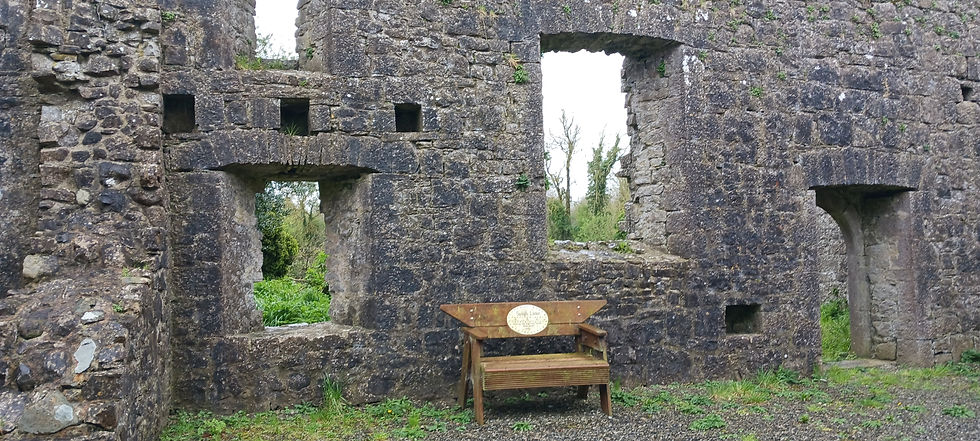
While Tlachtga (Hill of Ward) in Meath has had a legendary role in Irish life for over 6,000 years, Rathmore church beside it has existed for only 600. Yet it too provides interesting insights into what it means to be Irish.
Though the church was built by the Norman Verdons in the 15th century, the Plunketts married into the family and made Rathmore their religious home. The tomb of Sir Thomas Plunkett, patriarch and one-time Lord Chief Justice of Ireland, still lies there -- a knight clad in full armour with his dog at his feet.
The Plunkett’s origins were Norse, coming to Ireland in 980.They acclimatised quickly and while pledging themselves to the English throne, managed to remain Catholic during dangerous political and religious times.
One of them, St Oliver Plunkett, was beheaded in 1681 London for being a Catholic. Another, the poet and journalist Joseph Plunkett, was executed by the British in Dublin because he signed the 1916 Proclamation of the Irish Republic.
The Plunketts managed to survive because they married well over the years. Among the titles they gathered were Lord Killeen, Lord Dunsany and Earl of Finglas.
Today their abandoned church is in remarkably good condition for a reason that did not immediately occur to me.
It has a three-storey sacristy (sheltering Sir Thomas’ effigy-tomb), a balcony from which the family could attend Mass and a tall bell tower. Among the historical fragments on its walls is a 15th century carved labyrinth.
Despite its well preserved ruins Rathmore church is strangely lonely today. No trodden path across the fields leads there. Unusual for Ireland its graves seem seldom visited.
Its name provides a clue. The church is dedicated to St Lawrence the Deacon, a Roman martyr from 261 A.D. Despite their Christianity the Normans had no time for Irish saints. Their church were dedicated either to those of French origin or ‘neutral’ saints of the early Church like Lawrence.
In fact everything about the church is Norman. Even the decorated cross outside is not Celtic. It was erected by Sir Christopher Plunkett and his wife Catherine in the 16th century.
The Plunketts belonged to that distinctive group of Norse-Norman descent who were able to preserve their Catholicism and semi-Irish identity when others who identified as Irish or Catholic lost their possessions. Enough branches of the family changed sides to survive.
As a result In Irish society they remained closer to the Protestant Ascendency than to the Irish-Irish and Rathmore tells that story. It is lonely today because it has the tomb of Sir Thomas, one time Lord Chief Justice of Ireland, but not that of the Catholic martyr Oliver or Joseph, executed in 1916.


Comments